
Plastic Brains
We are the smartest we'll ever be when we are twenty, but after forty, the envy of wisdom. Here's why it's hard to change our minds and how doing so can help us live longer.

If you've ever sat around a kitchen table, you might have noticed that change is hard. The old folks are stuck in their ways, and the young people know better than anyone, even if they know very little.
When hot-button issues ruin a hot meal, sometimes sitting around a dinner table is barely more appealing than sitting around a garbage can. Navigating disagreements on important political topics is not for the faint of heart. If there's one thing a hearty debate can accomplish, it's that it can work up an appetite if you don't lose one instead. But rarely does anyone change their mind. Most would sooner lose it.
Change gets harder and harder as we age, especially in the gray matter. But if we change our minds intentionally, it just may help us live longer.
In this article, we'll explore the reasons why we don't change our minds and perhaps why we should, even if it is hard. I'll highlight five factors that keep us from altering our most deeply held views, factors that, if we are not aware of them, will be the shovels that put us in the ground, none the wiser.
Vicenials and Elders
The beauty of our early twenties is that we're smarter than everyone around us. This is the point in time when we realize that parents and deans of students just don't get it and probably never will because they are old and out of touch. Children at two decades old are perhaps the hidden gem of our time, or theirs anyway, admired most by themselves for the wisdom beyond their own years. The only thing they don't know is that they, too, will be the future deans and parents themselves, and that the ones they cock their heads to also were once vicennial intellectuals as well.
Knowledge is an incredibly addictive drug, and aging is its antidote.
The older I get, the more I wish I had never been young to begin with. Youth is wasted on them. Whether getting out of bed is painless or getting into it is accompanied by sighs and groans, the young will never know how good they have it, and yet, I never want to be one ever again. That said, at this stage of life, every time I get into bed, my greatest accomplishment the next day is to get back out.
I may be old to some, but I'm not that old. If the average lifespan is any measure, I am on the crest. I still have a lot of writing left in me. In the meat space, I'm pretty spry and by any measure of average lifespan many years of yard work ahead of me. If I'm lucky, I'll be out of touch for a really long time, outsmarted first by my children, then my potential grandchildren, and bratty neighbor kids who walk on my lawn, until eventually, the only yard work I am doing is becoming one.
For most of us, we decide who we want to be in life, and what ideals we want to live by, and we dig deeper into those ideals, every layer an added commitment to them. Many of our ideals, formed in our twenties, deserve revisiting, but we seem to keep digging anyway. Eventually, it gets harder to dig ourselves out before the day we become a resident of the very dirt we spent our lives unearthing.
For some of us, it will be our ideals that bury us.
Why is it so hard to change our minds? How do we change our minds when our minds have been made up? If anything is true, it's worth being tested, and testing any notion requires a willingness to falsify it. After all, do we want to believe the truth or believe we're right?
But just like George Bush in 2002 insisted that Iraq was developing 'weapons of mass destruction' and, after finding nothing, sought UN approval for the use of force, and after failing to garner support, invaded anyway. You've probably done the same, minus the full-scale military invasion part. For a more contemporary example, I expect Joe Biden to continue to insist he's the best man for the Presidency, even if he has to run the country from his grave.
Politicians have figured out how to exploit the public. By reducing everything to matters of identity. Race, gender, fiscal responsibility, reproductive health – everything is presented as a matter of our identities rather than a complex problem, as many policy issues are in reality. The hardest ideas to let go of are those that we use to define who we are. Half of the voting public votes to defend their rights, while everyone else is voting against them.
How to win hearts and minds is clear, but changing minds is much more difficult. And this is why we remain polarized.
Here are five factors that keep us from changing our minds, and how inviting change may offer us a fuller life.
Confirmation Bias
For the record, I knew I would start with this one (I've found that I'm pretty good at predicting the future half the time). Confirmation bias says we are more likely to favor the narratives and evidence reinforcing our beliefs. It's natural to notice the occurrences that confirm what we already believe while overlooking the ones that do not. Confirmation bias is essentially science's answered prayers.
When you expect something to happen, there's nothing better than a shred of evidence proving you were right. Much of our confirmation comes from the social reinforcement we receive from our networks. Whether it's the algorithm of a newsfeed or a chosen watering hole, it's more natural to accept a belief without question when it's the leading view of your community.
Effectivology puts it this way.
People experience the confirmation bias primarily because of challenge avoidance, which is the desire to avoid finding out that they’re wrong, and reinforcement seeking, which is the desire to find out that they’re right, and because of the flawed way they test hypotheses, as in the case of fixating on a single hypothesis from the start.
When candidates warn their supporters that an "election is rigged," all they need are a handful of curious moments to confirm what they're already persuaded to believe.
Those who favored the narrative but wanted to take a more rigorous approach will be affected by the next factor.
Tunnel Vision
When investigating a topic without realizing it, we often filter out the evidence that contradicts it. As I explain in "The Cake You Didn't Eat," your answers are found in the questions you ask, but the truth is obscured by the ones you don't ask. Researchers, more often than not, seek out the evidence to prove the conclusion they already have. Just ask anyone who's ever Googled anything.
This often happens when criminal investigators are building a case to convict someone of a crime or when tobacco companies research the health impacts of their products. Researchers will fund research that supports their group's position, publish research that favors their position, and suppress or criticize research that does not.
When significant funding, emotion, or a lengthy investment of time is involved, people will be impacted by the next factor.
Sunk Cost Fallacy
Whether it's the business you've invested in for years or the concert ticket you've already purchased, the sunk cost fallacy can make it hard for us to walk away.
Regarding ideas, we often hold onto beliefs because we've already built our lives around them, and it feels like a waste to abandon the work we've already done. This has obviously never happened to me when I've written half of an article, but if it did, I would probably complete the article despite the greater benefit of cutting it loose and working on something with more potential, giving in to the fallacy of sunk costs.
When you've sunk lots of emotion, time, or money into an idea, evaluating anything to the contrary becomes increasingly difficult. An opinion expressed is difficult to retract, even when cutting losses is the better investment.
Those who are deeply invested in a position risk being sucked in by the next factor.
Belief Perseverance
It's our worldview that helps us navigate this place, so when a point of view is contradictory to ours, we tend to look at it as a threat. Finding out our closely held beliefs aren't true can be like learning Ted Lasso's mustache is fake, so as a defense mechanism, we often combat the evidence or ignore it altogether. This is called belief perseverance.
Even if we learn that the information we were basing our opinion on is wrong, it's common to retain our belief nonetheless, seeking new ways to support the idea. Expect to see this later this year at a dinner table near you. At its basest level, when someone (say, perhaps a seedy uncle) hears an argument, even a good one, that contradicts their long-held belief, the traditional strategy is to start yelling speaking louder. The longer you have held a viewpoint, the harder it gets.
And this brings me to my final point. This last factor can be the toughest of them all. Biology.
Neural Plasticity
Aging is one of the most exquisite things I've experienced. Every year older I am, I feel more confident in my expertise, less concerned with what people think, and all around just more crunchy and dried out. I wake up with dry eyes, my joints make noise, and I'm pretty sure I could crack a hip simply by looking at a skateboard the wrong way.
I've got no qualms with aging, and neither should you. Aging is a gift, but our brains are no different than our dried fruits and sundry body parts. As we age, our brains basically start to dry out, losing a few ounces of the juice over time. We go from having the brain we've always relied on to something more like a 'braisin.'™️ (Listen, Raisin Brain is no laughing matter, but I am a serial joke teller.)
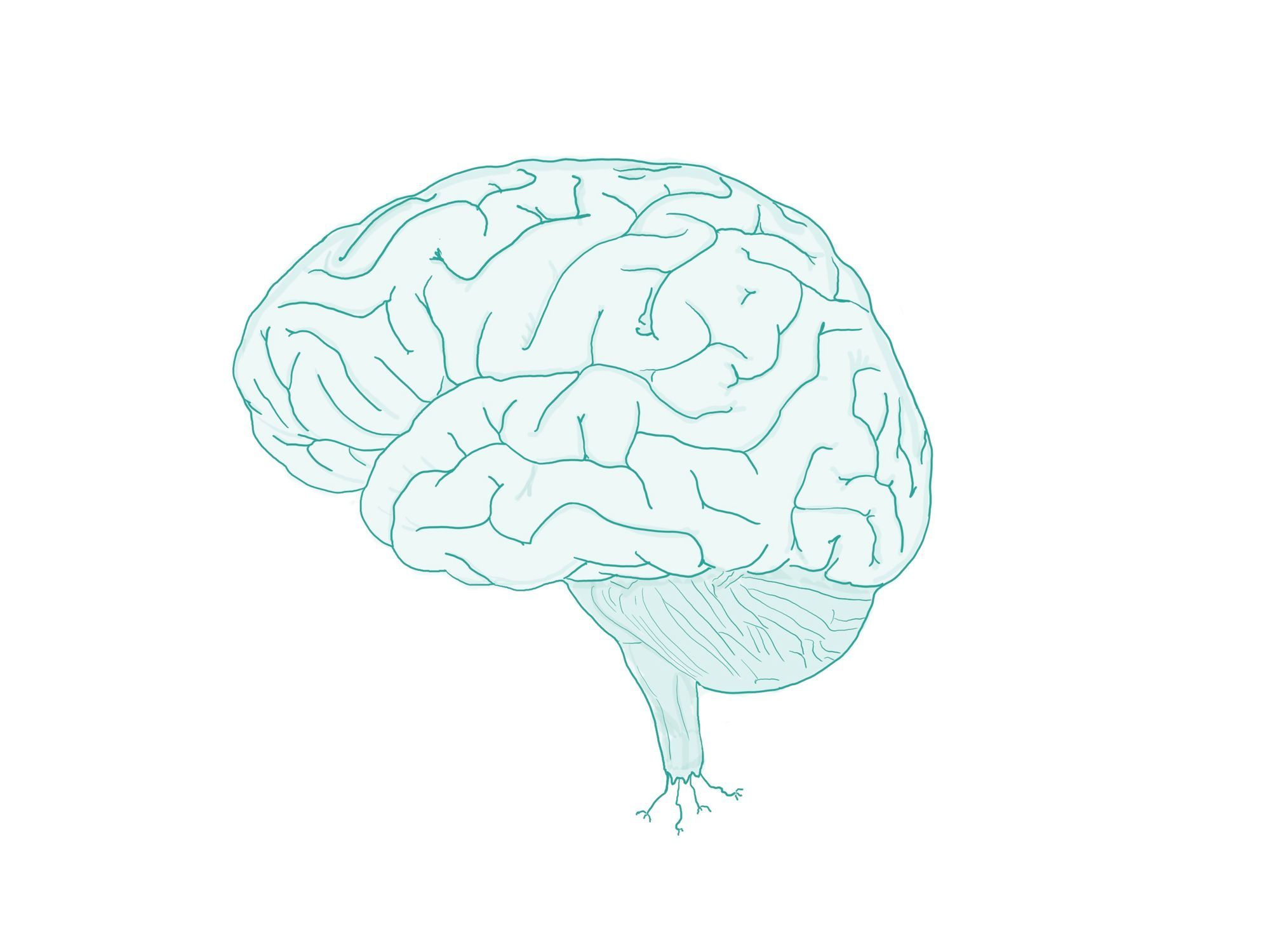
The "crusty old man" trope is more true than we might think. Because our brains are losing water weight, the flexibility, also known as plasticity, of our brains reduces, making it harder to remember new things, navigate spaces, develop new skills, or adopt new ideas. The difficulty is not in retaining a life of wisdom, remembering experiences or lessons learned, but in reevaluating the world around us and amending our views. Changing worldviews or developing new skills can be among the hardest because our brains lose the plasticity they once had.
Our brains become less pliable over time, reducing our ability to adjust our points of view, even with new evidence. This is especially true if we don't exercise our brains. "Neural plasticity" refers to the capacity of the nervous system to modify itself, functionally and structurally, in response to experience and injury.
We can keep our brains young, though. Continuing to engage in mentally stimulating activities, exploring new ideas, and renewing our views on the world around us can keep our minds younger for longer. That's why it's important to exercise our brains by inviting change and engaging in mentally stimulating conversations, including proving our beliefs wrong when we can. Some scientists even suggest that reading The Lorem Ipsum may be the key to the fountain of youth. Inviting new sides to each story will stretch our thinking, literally and figuratively.
If you're certain you are right, the best thing you can do is open your mind and hope you can change it. So try it. Your brain will thank you for it – for as long as you have it.