
One for the Junkies
I'm getting you the fix you need, even if I have the cut the product to make enough to go around.

Hey Everyone,
When I make a promise, I keep it. That's why today's newsletter lives up to the commitment I made to you last week.
Today, you're getting your money's worth.
I'm writing this week after spending the day in Albuquerque, NM, a city that serves as the transit hub for the cartel, moving methamphetamine and fentanyl. It's a place where you are asked if you want to make that a biggie size, and if you locked your car doors all by the same person.
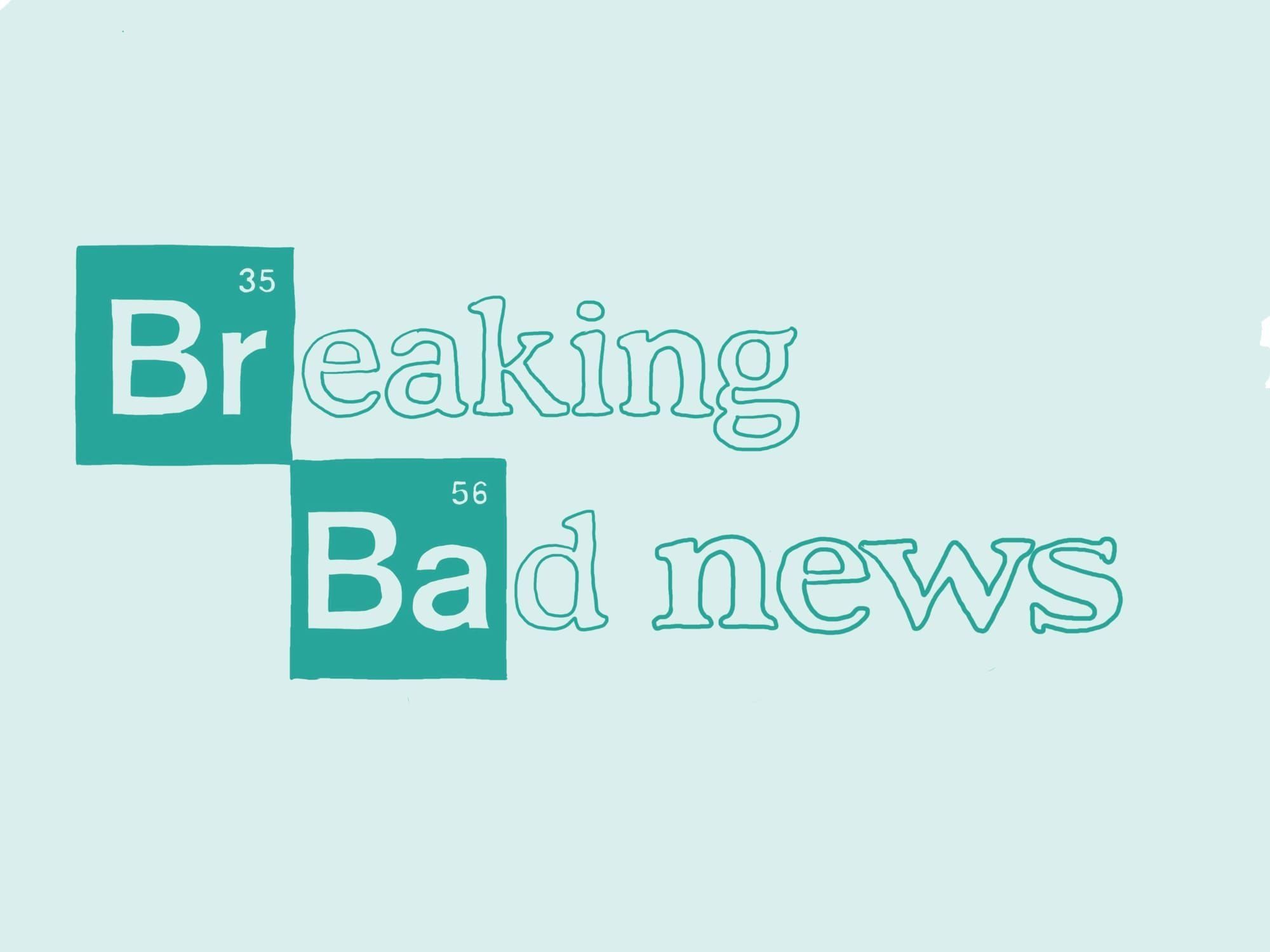
Being here has been a chance to talk to people for whom pervasive crime is a fact of life. It's also been a chance for me to finally use this same drawing again.
This week, I'm basically Bryan Cranston, as one who famously filmed the Breaking Bad series in Albuquerque. And I, too, film things in Albuquerque, except perhaps with a thinner budget and fewer appearances in my tightie whities. It's consuming work, and because of that, I'm rerunning an old piece, originally published in May of 2024.
For many of you who are new here, it's as fresh as the chicken at Los Pollos Hermanos, and trust me, Gustavo Fring would agree. The article covers another kind of meth. It's about the tricks marketers play on the human psyche to create false urgency, and the tech companies that have hacked it to gain even more power. I'll post it here in full, so you can enjoy it without further ado or additional clicking. Here's The Semantic Web.
The Semantic Web
Feature Story
Everyone likes a BOGO deal. It was the defining feature of Payless Shoes, next to quality—low quality, that is. In its heyday, men wore thick black soles, like something a doctor prescribed. Kids traded laces for Velcro. Any stitch of leather would be peeling off in a month. Every pair was purchased on the heels of another for half the price when $14.99 would get you shod and ready for the school week. Fifty percent of the shoes were purchased at 50% off, and they were made of 50% toxic chemicals, the trade-off for low prices.
But we bought it anyway, especially when it was on sale. Passing up a BOGO is a NOGO. If you can buy two pairs for the price of 1.5, why wouldn’t you? Momma needs a new pair of Oxfords, and so do the kids–because it's back-to-school season.
As soon as you see that sign, you'll walk out with a pair of the plainest off-brand Keds you can imagine and another in tow because when you get something this bright white, you're not going to wait to put those kicks on. You're going to wear them out the door. The shoes might not hold up, but the wallet will.
A week later, you'll discover you've passed on comfort and savings by choosing a pair of kicks with subpar insoles made of water-soluble foam, thinly veiled with the fibers of recycled paper-like fabric, supplemented by toxic petroleum-based materials. When you walk in to spend fifteen bucks and leave spending twenty-two and a half, you have almost spent more than if you had bought a $450 pair of Allen Edmonds. You fell for one of the classic blunders.
If you buy cheap, you buy twice.
And Payless lets you do it all in one shot. Because if you buy BOGO, you'll be buying it over and over again.
But you can't resist. We marketers have always known it. Anyone who believes they have free will should ask themselves this one question. Would you have bought the same $10 and $5 shoes if they were regularly priced at $7.50 each? Our stats say no. If you want to know the truth about the marketing field, where I spend most of my days, I've exposed it in these pages not long ago, which I’ll quote here.
...we attract some rough ones in this field. I always say if you're trying to pull a marketer out of a barrel, reach down as far as you can until you find a lawyer, and then go even deeper. There you'll find some of the best writers, the most creative designers, and the most self-centered people in the world.
My industry is rife with liars, cheats, and thieves (in the industry, we call them "account executives"), but having hired hundreds of marketers over the years, I've reached down to the bottom of the barrel more than enough. I've become far more selective in my hiring in more recent years. And you should too. (source)
Let me put it another way. The definition of an employee is someone who puts stickers on a $2,000 laptop that’s not theirs and doesn’t clean it off when they return it. If you think that's bad, just remember that it was a marketer who designed the stickers, and an account executive probably came up with the idea, and if they didn't, they definitely took credit for it.
But we're not without remorse. We may be among the lowest species on earth, but we're still better than dry cleaners. Our kind deals with guilt just like any human. When we're in therapy (and trust me, people in the ad business get a lot of therapy if they don't opt for whiskey instead), we bemoan the toll of working in a business based on manipulating people. That’s why we’re here. We exist to persuade you to do what we want you to do, whether you need it or not. And for generations, we've had the BOGO deal in our arsenal. It was right next to the ninety-nine-cent pricing strategy and the furniture store going-out-of-business sale. One yellow sticker at a time, and your brain was converted from mush to money. The marketing team was awash in high-fives every time the new sales report came out.
This all changed in 2007. For the worse.
In 2005, a "Like" button was added to social content platforms Vimeo and FriendFeed. The feature allowed users to quickly react to content by saying, "This terribly composed image you posted on Flickr from your flip phone of you standing by the Grand Canyon with your dog is really nice!" all in one click. Quietly, a team of engineers at Facebook began working on a new version of the like button that would change the web forever.
It was rolled out in 2009. Based on a once-abandoned web standard, the like button revived concepts of the semantic web, where data is linked to other data. Except in this case, you are the data, and so is everyone you know and everything you do.
A simple click of the Like button thrusts the liked content before the faces of your ilk and kin, screaming to your every connection that you have validated what will soon be their choices.
To the engineers at Facebook, this was a chance to create engagement by giving people a way to show approval—something that added interactions beyond the comment feature, which, as a matter of percentage, was underwhelming. Because commenting requires a certain willingness to exit one's shell, a Like can be pecked swiftly from under the covers like a squirrel grabbing his nuts before sweeping back into hiding. Likes grew exponentially, and tracking interactions is now momentary.
Out of the creation of the Like button came a suite of data about people. No longer did you have to post in your bio that you were fiscally conservative and socially liberal. Facebook was beginning to know more about your real political views than you did. Your music preferences and favorite movies were mined while all the vacation pictures captured your jealousy.
Facebook began inviting companies to embed the Like button across their own websites. Soon, a tracking code was added to every advertiser's website, tracking the interests, behaviors, and purchases of people all over the world as long as they had a Facebook profile. Facebook would change its settings to keep users logged in indefinitely so that their interactions were captured in real time, all the time, no matter which sites they visit.
Before you knew it, the BOGO deal of a new generation was discovered, and every marketer, politician, and media agency followed suit. This deal doesn't just make you believe you're getting a better price. It makes you believe all kinds of things. For users of the semantic web, mental health has plummeted while time spent with others is divided by screens. Everything from body image to purchasing habits has been shaped, thanks to the web, where we are convinced we are in control.
Facebook created the new standard web, and now, for most of us, an app decides when we take our pictures, how we interact with friends, and what we see online.
Our necks are hunched, our hands cramped, and our thumbs are stronger than ever. Wars that were once proxies are now worldwide conflicts, and our countries are split while our wallets are hollowed out for free shipping.
If an algorithm can change elections, consumer behavior, and personally held beliefs at the speed of lightning, the price has proven to be very high. When we bought into the semantic web, we bought one problem, but we got another for free.
Now, with every cookie, the web's content is being diluted to fit the demands of technology companies and data miners to architect the content of our brains. Meanwhile, we're jonesing to get well on our daily supply, as our free will is bent to the will of marketers.
That's it for this week.
Remember: We agree. The Lorem Ipsum is addictive. Give your friends their first fix for free, and they'll surely be hooked for life.
Have a great weekend!
